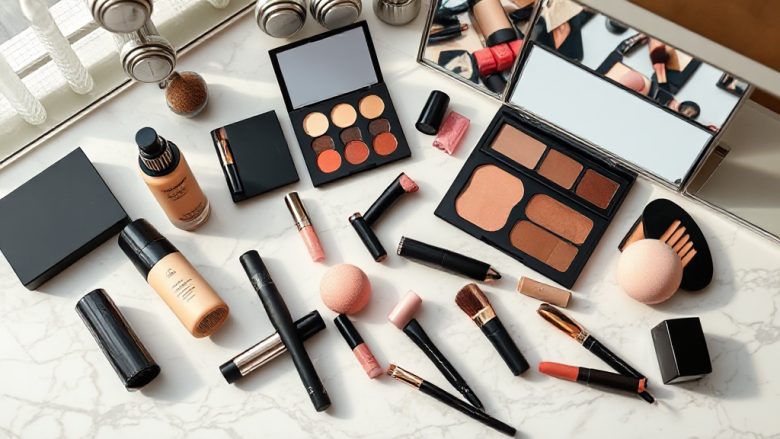
You don’t need a designer counter to build a makeup bag that works. UK drugstores are stacked with affordable formulas that rival products costing three or four times as much, and this complete guide to drugstore makeup in the UK will take you from bare face to finished look using nothing but high street buys. Whether you’re a total beginner or simply tightening your budget, everything below assumes you’ll be shopping in Boots, Superdrug, or the beauty aisle of a supermarket. No luxury splurges required.
The trick isn’t buying everything at once. It’s understanding which product types matter, which ones you can skip, and how to apply what you’ve bought so it actually lasts through a British commute, a rainy afternoon, and whatever the evening throws at you. Let’s work through it step by step.
Skincare Prep Before Any Makeup Goes On
Every good makeup day starts with skin that’s been looked after. If your base is patchy or your foundation clings to dry patches, the problem is almost never the foundation. It’s the prep underneath it.
Start with a gentle cleanser suited to your skin type. Oily skin does well with a foaming gel, while dry or sensitive skin prefers a cream cleanser that doesn’t strip. Clean skin gives makeup something smooth to sit on. Follow with a lightweight moisturiser and give it a minute or two to sink in before you go any further. Rushing this step is the single most common reason foundation separates by lunchtime.
If you have visible pores or shine, a drugstore primer is worth the small spend. A silicone-based primer blurs texture and helps foundation grip, while a hydrating primer suits drier skin. You don’t need both. Pick one based on what your skin actually does across a normal day.
Sunscreen matters too. Many UK drugstore moisturisers and primers now include SPF, which saves a step in the morning. If yours doesn’t, a separate facial SPF under your makeup is a sensible habit rather than an optional extra.
Building a Base: Foundation, Concealer and Powder
The base is where most beginners overspend and underthink. You need three things at most: foundation, concealer, and a setting powder. That’s it.
For foundation, decide on your finish first. Matte suits oily skin and long days. Satin or natural finishes flatter most people and look less flat in photographs. Dewy formulas work beautifully on dry skin but can slide on oily skin unless you set them. Drugstore foundations come in liquid, cream, and powder forms, and the liquid versions are the most forgiving for beginners.
Shade matching is the hard part. Test on your jawline, not your hand, and check it in daylight if you can. Most UK high street ranges now carry a decent spread of undertones, so take your time. A foundation that’s half a shade off is more noticeable than one that’s slightly sheer.
Apply with a damp sponge for a natural finish or a dense brush for fuller coverage. Start in the centre of your face and blend outwards. Use less than you think you need, then build. Concealer goes on after foundation, not before, and only where you actually need it: under the eyes, around the nose, or on any blemish. A peach-toned concealer neutralises dark circles better than a pale one.
Set only where you get shiny. Powdering the whole face flattens your complexion and makes dry areas look worse. A light dusting under the eyes, down the centre of the forehead, and around the nose is usually enough.
Eyes: Brows, Shadow, Liner and Mascara
Eyes are where a drugstore routine can look genuinely expensive. The formulas have improved enormously, and a simple neutral look costs very little to put together.
Begin with brows. A tinted brow gel is the fastest option and holds hairs in place while adding colour. If your brows are sparse, a fine-tipped brow pencil lets you draw in individual hairs rather than blocking them in. Match your brow colour to the darker tones in your hair, not the lighter ones.
For eyeshadow, a small neutral palette beats a huge one. Look for a matte mid-brown, a slightly darker shade for the outer corner, and a light shimmer for the lid or inner corner. Apply the mid-tone through the crease with a fluffy brush, blend, then deepen the outer corner. Blend more than feels necessary. Harsh lines are what make drugstore eyeshadow look cheap, and it’s almost always an application problem rather than a formula one.
Eyeliner comes in pencil, gel, and liquid. Pencil is the easiest for beginners and works well smudged along the lash line. Gel gives a sharper line with a bit more control than liquid, which is the least forgiving option. If you’re new to liner, start with pencil and build confidence before switching.
Mascara is the one product where drugstore options genuinely compete with anything on a beauty counter. A volumising formula for thin lashes, a lengthening one for short lashes. Wiggle the wand at the base of the lashes and sweep upwards. One coat for daytime, two for evening. Replace it every three months, since mascara is the product most likely to cause irritation.
Cheeks: Blusher, Bronzer and Highlighter
Cheek products bring a face back to life, and they’re cheap to experiment with. A powder blusher suits oily skin and lasts well, while a cream blusher melts into dry skin and looks more natural. Cream formulas also work nicely as a subtle lip colour if you’re travelling light.
Choose a blusher shade close to the colour your cheeks go when you’ve been out in cold air. Peachy tones flatter warm complexions, rosy pinks suit cooler ones. Apply to the apples of your cheeks and blend up towards your temples. Keep it light. Blusher is much easier to add than to remove.
Bronzer adds warmth and a bit of shape. A matte bronzer is more versatile than a shimmery one, since you can use it to gently define your jawline and the sides of your nose as well as your cheeks. Go one or two shades deeper than your skin, no more. Orange is the giveaway that you’ve gone too far.
Highlighter is optional but fun. A subtle champagne or soft gold suits most UK skin tones. Tap a little onto the tops of your cheekbones, the bridge of your nose, and your cupid’s bow. Powder highlighters are easier to control than liquid ones when you’re starting out.
Lips: Balm, Liner, Lipstick and Gloss
Lips are the quickest way to change a whole look, and drugstore lip products are some of the best value in the aisle.
Start with a lip balm if your lips are dry, and give it a minute to absorb before applying colour. A tinted balm is a great everyday option: sheer, comfortable, and easy to reapply without a mirror. For something longer-lasting, a matte lipstick delivers colour that stays put through tea and lunch, though it can feel drying. A satin finish sits between the two and suits most people.
Lip liner isn’t essential, but it helps if you want a defined shape or you’re wearing a bold colour that tends to bleed. Choose a liner close to your natural lip colour rather than matching your lipstick exactly. That way it works with everything in your bag.
Gloss has made a strong comeback, and drugstore versions are excellent. A clear or nude gloss over any lipstick adds shine and makes lips look fuller. If you’re wearing gloss alone, a slightly tinted formula gives more polish than a completely clear one.
Tools: What You Actually Need
You can apply a full face with your fingers, and plenty of people do. But a few inexpensive tools make a noticeable difference, and drugstore brush sets are perfectly good.
A damp makeup sponge for foundation, a fluffy brush for powder and blusher, a small angled brush for brows, and a blending brush for eyeshadow will cover almost everything. Add a fine-tipped brush for concealer if you want precision. That’s five tools, and you can buy them individually or in a budget set.
Wash your brushes every week or two with a gentle soap or shampoo. Dirty brushes cause breakouts and apply product unevenly. Sponges should be washed after every use and replaced every couple of months. This is the least glamorous part of makeup, and it’s the one that keeps your skin clear.
Setting and Making It Last All Day
Finishing is what separates a look that survives the day from one that’s gone by mid-morning.
Lightly powder the areas that get shiny, then use a setting spray to meld everything together. A setting spray won’t make makeup bulletproof, but it does stop powder from looking dusty and helps base products settle into the skin. Hold the bottle about a foot from your face and mist in a cross shape, then let it dry without touching your face.
Keep a small touch-up kit in your bag: the lip product you’re wearing, a compact powder, and a concealer for any redness that appears. Blotting papers are handy if you get oily, since they remove shine without disturbing your makeup.
At the end of the day, take it all off. A cleansing balm or oil breaks down makeup and sunscreen properly, followed by your normal cleanser. Sleeping in makeup is the fastest way to dull skin and clogged pores, no matter how good the products were.
Frequently Asked Questions
Is drugstore makeup as good as high-end makeup?
Often, yes. The gap has narrowed a lot, especially for mascara, lip products, and powder formulas. Where high-end sometimes wins is in foundation shade ranges and unusual colours, but for a standard everyday routine, drugstore products perform very well.
What should a beginner buy first?
Start with a foundation or tinted moisturiser, a concealer, a mascara, a blusher, and a lip product. That’s a complete basic face. Add eyeshadow, liner, and bronzer once you’re comfortable with the essentials.
How do I stop my makeup from sliding off in the rain or humidity?
Use a primer suited to your skin type, keep foundation layers thin, set with a light powder in your oily zones, and finish with a setting spray. Heavy layers are more likely to break down than light ones.
How often should I replace drugstore makeup?
Mascara every three months, liquid foundation and concealer every six to twelve months, and powder products like eyeshadow and blusher every year or two. If a product smells different or changes texture, replace it regardless of the date.