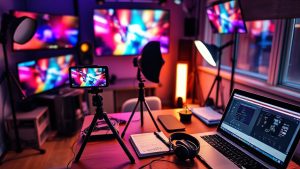
Digital storytelling sounds like one of those terms that should be complicated. It gets thrown around in classrooms, marketing meetings, and documentary workshops, and most people nod along without being entirely sure what it means. Here’s the good news: the basics are genuinely simple. If you can tell a story out loud, you already understand most of what digital storytelling is about. The digital part just changes the tools.
This post answers the ten questions people ask most often about digital storytelling, in plain language and without the jargon. If you have ever wondered whether you need expensive equipment, how long a digital story should be, or whether your phone is good enough, you will find a straight answer below. Each question gets a short, practical response you can act on today. No fluff, no theory for the sake of theory.
1. What exactly is digital storytelling?
Digital storytelling is simply telling a story using digital tools. That could mean a short video, a podcast episode, a photo essay with narration, an interactive web page, or a slideshow with a voiceover. The medium changes, but the core stays the same: a person, a moment, a change, and a reason to care.
The term became popular in the 1990s when community workshops helped ordinary people turn personal experiences into short narrated videos. Today it covers everything from a two-minute clip filmed on a phone to a full documentary series. The label is broad on purpose. If your story reaches someone through a screen or a speaker, it counts.
2. Do I need expensive equipment to start?
No. A modern phone records video and audio that would have cost thousands of pounds a decade ago. Good light and a quiet room matter far more than the camera. If you want to improve one thing first, improve your sound, because viewers forgive soft images but they switch off when audio is painful.
Start with what you own. A phone, a cheap clip-on microphone, and a window for natural light will carry you through your first several projects. Upgrade only when a specific problem keeps appearing, not because a review site told you to.
3. How long should a digital story be?
Shorter than you think. Most effective digital stories run between two and five minutes. That window is long enough to set up a situation, show a change, and land an ending, but short enough that people watch to the end. Attention is the scarcest resource you have.
If your story feels too long, it usually has two stories inside it. Pick the stronger one and save the other for later. A tight three-minute piece beats a rambling ten-minute one almost every time.
4. What makes a story different from just sharing information?
Information answers a question. A story makes someone feel the answer. If you say a river was polluted, that is information. If you show a fisherman holding up his catch from twenty years ago next to what he caught this morning, that is a story. The difference is change over time and a person we can follow.
Every story needs a bit of tension, something that is not resolved yet. It does not have to be dramatic. It just has to make the viewer wonder what happens next. Without that pull, you have a report, not a story.
5. Can I tell a digital story without showing my face?
Absolutely. Plenty of strong digital stories use hands, objects, landscapes, or animation instead of a talking head. A voiceover over photos can be deeply moving. What matters is that the audience senses a real person behind the choices.
Some people avoid appearing on camera for privacy, shyness, or professional reasons. That is fine. Use close-ups of meaningful objects, screen recordings, or simple illustrations. If your narration is honest, the story still lands.
6. What software or apps do I actually need?
Less than you would expect. A basic video editor that came free with your device will handle most first projects. For audio, a simple recording app and a quiet room are enough. If you want captions, most editors now generate them automatically, though you should always check them for mistakes.
The trap is spending weeks comparing tools instead of making something. Pick one editor, learn five buttons, and finish a short piece. Skill comes from finishing projects, not from owning the best software.
7. How do I find a story worth telling?
Look at small moments that changed something for you. A conversation that shifted your view. A decision you almost did not make. A person who showed up when you needed them. These are the stories only you can tell, which is exactly why they work.
A useful exercise: write down ten moments from your life that you still think about. Then circle the one that other people ask about when you mention it. That is usually your strongest starting point, because it already has natural interest built in.
8. How do I keep viewers watching until the end?
Open with movement, not background. Start in the middle of something happening, then explain how you got there. If your first fifteen seconds are throat-clearing, most people are gone before the story begins.
After that, keep raising small questions. Why is she packing that box? Where is he driving at night? Each unanswered question buys you a little more attention. Answer them gradually and save the biggest one for last.
9. Is digital storytelling only for personal stories?
No, though personal stories are where it started. Businesses use it to explain why they exist. Teachers use it to bring history or science to life. Nonprofits use it to show the people behind a cause. Anywhere a fact needs to stick, a story helps it stick.
The rules do not change much across those settings. Find a person, show a change, keep it short, and make the audience care. The setting changes the tone, not the structure.
10. How do I know if my digital story worked?
Watch how people respond. Did they ask a question? Did they share it with someone specific? Did they stay to the end? Those signals tell you more than view counts, which can be inflated by autoplay and scrolling.
Ask one or two honest people for feedback and listen without defending yourself. Then make the next one slightly better. Digital storytelling is a craft, and crafts improve through repetition, not through waiting for perfect conditions.
Frequently asked questions
Do I need to be a good writer to tell a digital story?
No, but you need to be clear. Write your script the way you speak, then read it aloud and cut anything you stumble over. Simple sentences spoken honestly beat polished prose every time.
Can I make a digital story on my phone only?
Yes. Many award-winning short pieces have been shot, edited, and published entirely on a phone. The limitation is rarely the device. It is usually the planning and the patience to finish.
How long does it take to make one?
A simple two-minute story can take an afternoon once you know your tools. Give yourself extra time for the script, because writing and rewriting is where most of the quality comes from.
Digital storytelling questions answered simply come down to one idea: start small, be honest, and finish something. The tools are cheap, the rules are few, and the only real requirement is a story you actually want to tell.